
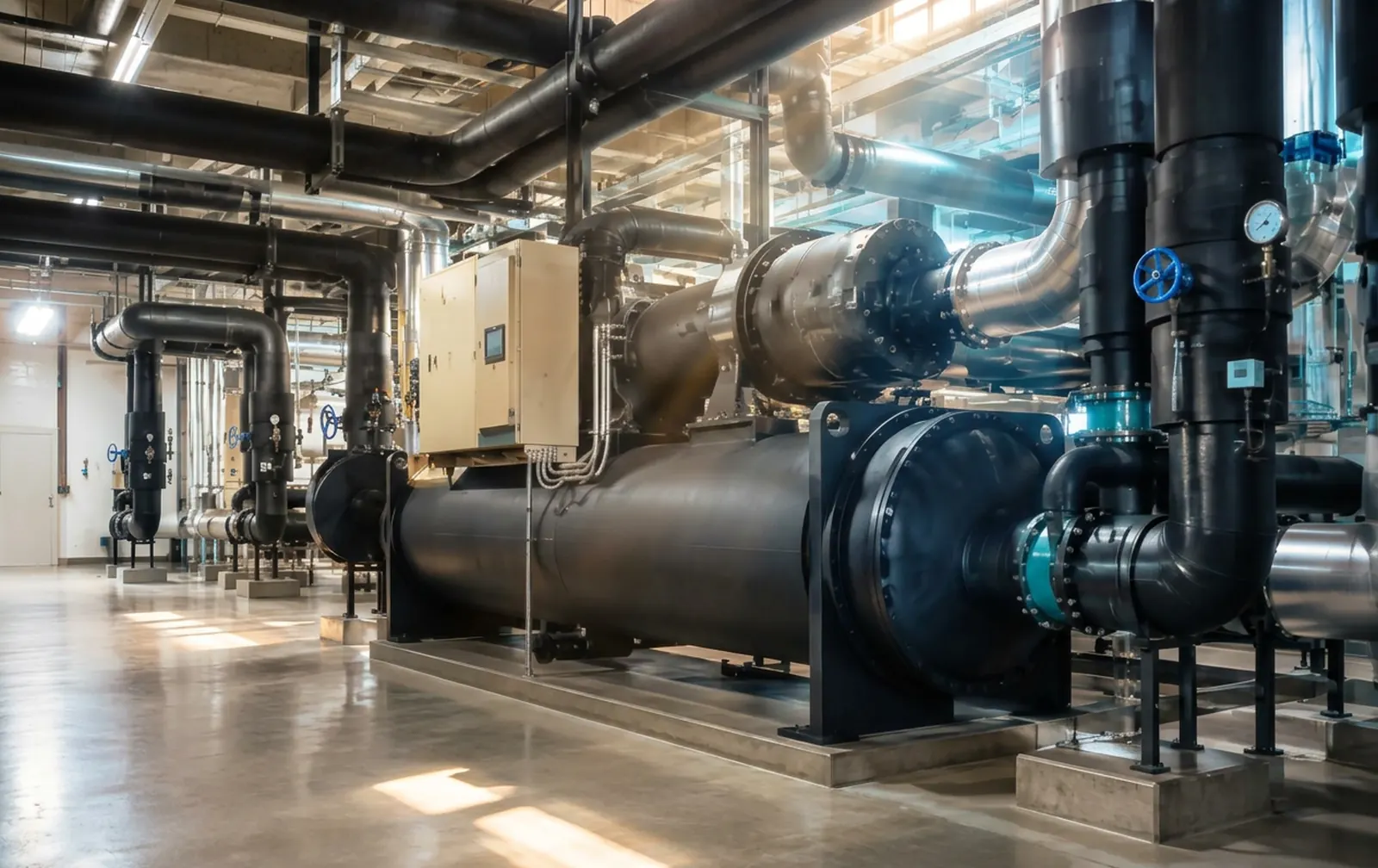
Central plant
Chiller service, repair and maintenance
A chiller is often the single most important piece of equipment in a building. When it falters, every fan coil and air handler on the loop feels it. We service air-cooled and water-cooled chillers and the chilled-water plant around them.
Air-cooled chillers
Air-cooled chillers reject heat directly to outdoor air through condenser coils and fans. In South Florida they work hard through long cooling seasons, and condenser coil condition has a direct effect on capacity and head pressure.
- Condenser coil cleaning and fin condition
- Condenser fan motors and controls
- Corrosion inspection on coastal sites
Water-cooled chillers
Water-cooled chillers reject heat to a condenser water loop and cooling tower. Their performance depends on the tower, condenser water flow and tube condition as much as on the chiller itself.
- Condenser and evaporator approach temperature checks
- Tube inspection and cleaning coordination
- Condenser water flow and pump checks
Chiller maintenance
Planned chiller maintenance is about catching drift before it becomes a failure: rising approach temperatures, oil problems, refrigerant loss, electrical wear or controls faults. A typical programme mixes routine operating checks with less frequent, more detailed inspections.
We tailor the scope to the chiller type, age, run hours and how critical it is to the building, and record readings so trends are visible over time.
- Operating log review: pressures, temperatures, amps and run hours
- Evaporator and condenser approach trending
- Oil level, pressure and condition checks where applicable
- Refrigerant leak checks
- Electrical connections, starters and safeties
- Flow switches, sensors and control calibration
- Annual inspection scheduling and tube cleaning coordination for water-cooled units
Chilled-water plant and controls
Chillers rarely fail alone. Pumps, valves, sensors, sequencing and the building automation system all influence how the plant behaves. We look at the plant as a system and coordinate with your controls contractor where one is involved.
Quick guide
What are you planning?
Where are you with your chiller? Pick the closest match to see what we'd talk through and what a technician would check. This is a guide, not a diagnosis or a quote.
Questions to discuss
- Chiller type: air-cooled or water-cooled
- Current maintenance records
- Operating hours and seasons
What a technician would evaluate
- Operating log review
- Condenser and evaporator condition
- Controls, safeties and oil checks
Your selection ("Planned maintenance") is added to your request so we have context when we call.
Questions to discuss
- Alarm code and when it trips
- Load at the time
- Recent changes to the plant
What a technician would evaluate
- Alarm history
- Flow, pressures and temperatures
- Controls and safeties
Your selection ("Alarms or trips") is added to your request so we have context when we call.
Questions to discuss
- Age and repair history
- Refrigerant concerns
- Planned shutdown windows
What a technician would evaluate
- Capacity and plant layout
- Rigging and access
- Controls integration
Your selection ("Replacement planning") is added to your request so we have context when we call.
How it works
Chilled-water and condenser-water loops
The chiller cools water for the building; on water-cooled plants, condenser water carries heat to the cooling tower. Solid cyan: cooler side; dashed red: warmer side. Illustrative only, not an engineering design.
Point 1 of 4
Evaporator & condenser
Heat exchangers inside the chiller. Fouling or flow problems reduce capacity and trigger alarms.
Diagram described in text
- Evaporator & condenser: Heat exchangers inside the chiller. Fouling or flow problems reduce capacity and trigger alarms.
- Chilled-water loop: Cooled water serves coils across the building and returns warmer.
- Cooling tower (mechanical): Fans, fill and distribution reject heat. Water treatment is a separate specialist responsibility.
- Pumps, valves & controls: Maintain flow and sequence equipment; flow faults are a common trip cause.
Process
How chillers work is handled
- 01
Share equipment details
Chiller make, model, tonnage and age if you have them, plus current symptoms or alarms.
- 02
Site review
We review the plant, logs and controls with your facilities contact.
- 03
Scope and schedule
Repair, maintenance or replacement scope is set out in writing.
- 04
Carry out and record
Work is completed and readings are recorded for future comparison.
What to have ready
- Chiller make, model and serial
- Recent operating logs
- Plant drawings if available
What affects scope and cost
- Chiller type and size
- Plant access and rigging
- Condition of pumps, valves and controls
- Shutdown scheduling
Good to know
- Water treatment is a separate specialist responsibility
- Chiller work is planned around safety and building operations
We don't publish prices: cost depends on what's found on site and is explained before work starts.
Coverage
Across South Florida
Chillers requests are taken from properties in Miami, Broward County and Palm Beach County. Share your ZIP code and we'll confirm.
Service areasChillers questions
Do you service both air-cooled and water-cooled chillers?
Yes. The maintenance scope differs between the two, and we set it out for your specific equipment.
Can you handle the cooling tower too?
Yes, for mechanical service. See our cooling tower page, which explains how mechanical work relates to water treatment.
How often should a chiller be serviced?
It depends on the equipment, run hours and how critical it is. Most programmes combine regular operating checks with a more detailed annual inspection. We'll recommend a schedule after reviewing your plant.
Do you work with building automation systems?
We check how controls are operating the chiller and coordinate with your controls provider when changes to the automation system are needed.
Air-cooled or water-cooled — do you work on both?
Yes. Water-cooled chillers also involve a condenser-water loop and cooling tower, which we coordinate as part of the plant.
Emergency line
24/7 emergency HVAC service
We answer emergency calls and dispatch technicians 24/7 across Miami, Broward and Palm Beach. We'll give you a realistic arrival estimate when you call.
Ready when you are.
Call to talk it through, or send a request and we'll follow up by phone. Serving Miami, Broward and Palm Beach.
Call (305) 433-7627